
China detains investigative journalist Liu Hu and assistant after corruption report, rights group says
Chinese authorities have detained investigative journalist Liu Hu and his assistant Wu Yingjiao after they published a WeChat report alleging corruption by a local official in Sichuan, according to Reuters and Reporters Without Borders. The case raises fresh concerns that independent reporting is being treated as criminal activity—while the original investigation has reportedly been deleted from the platform.
3 min read
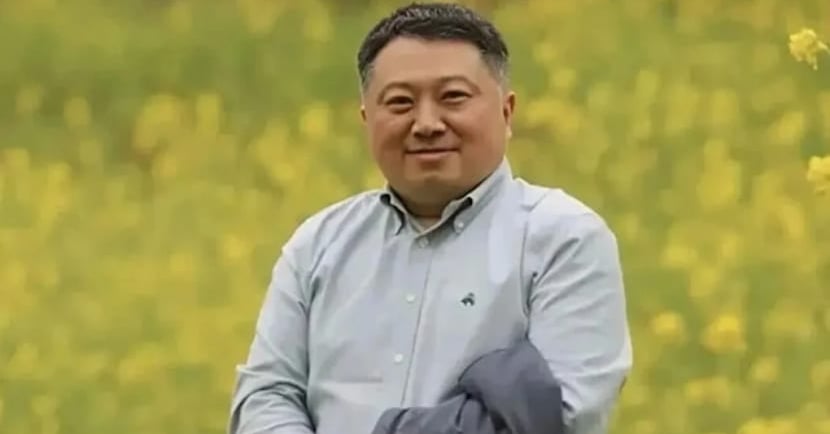
China detains investigative journalist Liu Hu and assistant after corruption report, rights group says
Chengdu / Beijing | 9 February 2026 — Chinese authorities have detained veteran investigative journalist Liu Hu and his assistant Wu Yingjiao after the pair published a report alleging local-level corruption in Sichuan province, according to Reporters Without Borders (RSF) and a police statement cited by Reuters. The detentions have renewed international concern that independent reporting exposing alleged wrongdoing—especially involving officials—can quickly be reframed as a public-order or criminal matter rather than protected journalism.
The report, published on WeChat on 29 January 2026, reportedly accused Pu Fayou, the Communist Party secretary of Pujiang County (Sichuan), of corruption. RSF says Liu and Wu were taken into custody on 1 February, and that the WeChat post has since been deleted.
What’s confirmed so far
The publicly reported facts are limited—but consistent across multiple sources:
Police in Chengdu said they are investigating a 50-year-old man surnamed Liu and a 34-year-old man surnamed Wu, among others, on suspicion of “making false accusations” and “illegal business operations.” The statement said they were placed under “criminal coercive measures,” a legal term typically used to indicate detention.
Authorities provided only surnames; RSF and Chinese media identified the detainees as Liu Hu and Wu Yingjiao.
RSF says the investigation was published on WeChat on 29 January, and the detentions followed on 1 February.
Beyond that, important details remain unclear in open reporting: whether either journalist has been formally arrested versus administratively detained, whether lawyers have access, and what specific conduct authorities say constitutes “illegal business operations.”
Why this story matters for press freedom
This is a familiar pattern in environments where independent reporting is treated as a political threat: the issue is rarely framed as “journalism” at all. Instead, the reporting is recast as falsehood, economic wrongdoing, or public-order disruption—categories that shift attention away from the substance of the investigation and toward alleged misconduct by the reporters themselves.
The two cited suspicions—“making false accusations” and “illegal business operations”—are particularly sensitive from a press-freedom perspective because they can be used as broad umbrellas:
“False accusations” can become a way to punish reporting without litigating the underlying allegations publicly.
“Illegal business operations” can function as a pressure tool against independent journalists who rely on informal funding, consulting, or ad hoc support to keep reporting—especially when they are not operating within state-aligned media structures.
RSF’s statement frames the detentions as retaliation for investigative reporting and calls for the immediate release of both journalists.
The platform reality: publish, then disappear
This case also highlights the “platform bottleneck” that increasingly defines modern censorship: even when a report is published and circulated widely, it can be removed quickly, shrinking the public record and complicating follow-up reporting.
RSF says the investigation was deleted from WeChat after publication. Reuters also notes the report was published and later deleted. That matters because deletion does more than silence one article—it makes it harder for other journalists to verify details, compare claims, or build further reporting from the same thread.
What RSF adds that the police statement doesn’t
Official statements rarely offer context about why a particular report triggered a response. RSF’s account adds a key detail: after the investigation was published but before detention, Liu posted screenshots of messages he said came from a staff member of the Chengdu City Discipline Inspection Commission and Supervisory Commission. In those messages, the official allegedly urged Liu to contact the commission and said complaints should be filed through official channels rather than published.
If accurate, that exchange is telling—not because it proves the corruption allegation (it doesn’t), but because it reflects a common state preference: move scrutiny into controlled internal processes rather than allow public reporting to force accountability in the open.
Who Liu Hu is (and why his detention resonates)
Liu Hu is widely described as a veteran investigative reporter. Regional reporting notes he has been known for corruption-related investigations for more than a decade, and that he has faced legal pressure previously. Channel NewsAsia, citing Chinese media and Caixin, reported that Liu is a veteran journalist and that the detained “Wu” is his assistant (identified there as Wu Lingjiao—close transliteration differences appear in coverage).
This background is part of why press-freedom groups treat the case as emblematic: when a recognised investigative journalist is detained after publishing allegations about an official, it signals risk not only to that journalist but to anyone considering similar reporting.
What authorities are likely trying to achieve
When cases are framed through “false accusations” or business offences, they often serve several goals at once:
Deterrence: send a message that naming officials comes with personal consequences.
Narrative control: shift public debate away from “is the allegation true?” to “were the reporters acting illegally?”
De-platforming: remove the story and isolate the reporters, cutting the reporting chain.
Procedural advantage: keep the matter in a legal lane that is easier to control than open public scrutiny.
None of that proves intent in this specific case—but it describes why such charges raise alarm among press-freedom monitors.
Contact
Subscribe to our newsletter
© 2002 - 2026. All rights reserved.